OpenAI plans flexible data-centre demand through Grid Protectors
OpenAI announced Grid Protectors on November 2, proposing cooperation with utilities and regulators so future compute campuses can reduce electricity demand when grids are under pr
OpenAI announced Grid Protectors on November 2, proposing cooperation with utilities and regulators so future compute campuses can reduce electricity demand when grids are under pressure. Arrangements will be negotiated locally and announced as agreements are finalised.
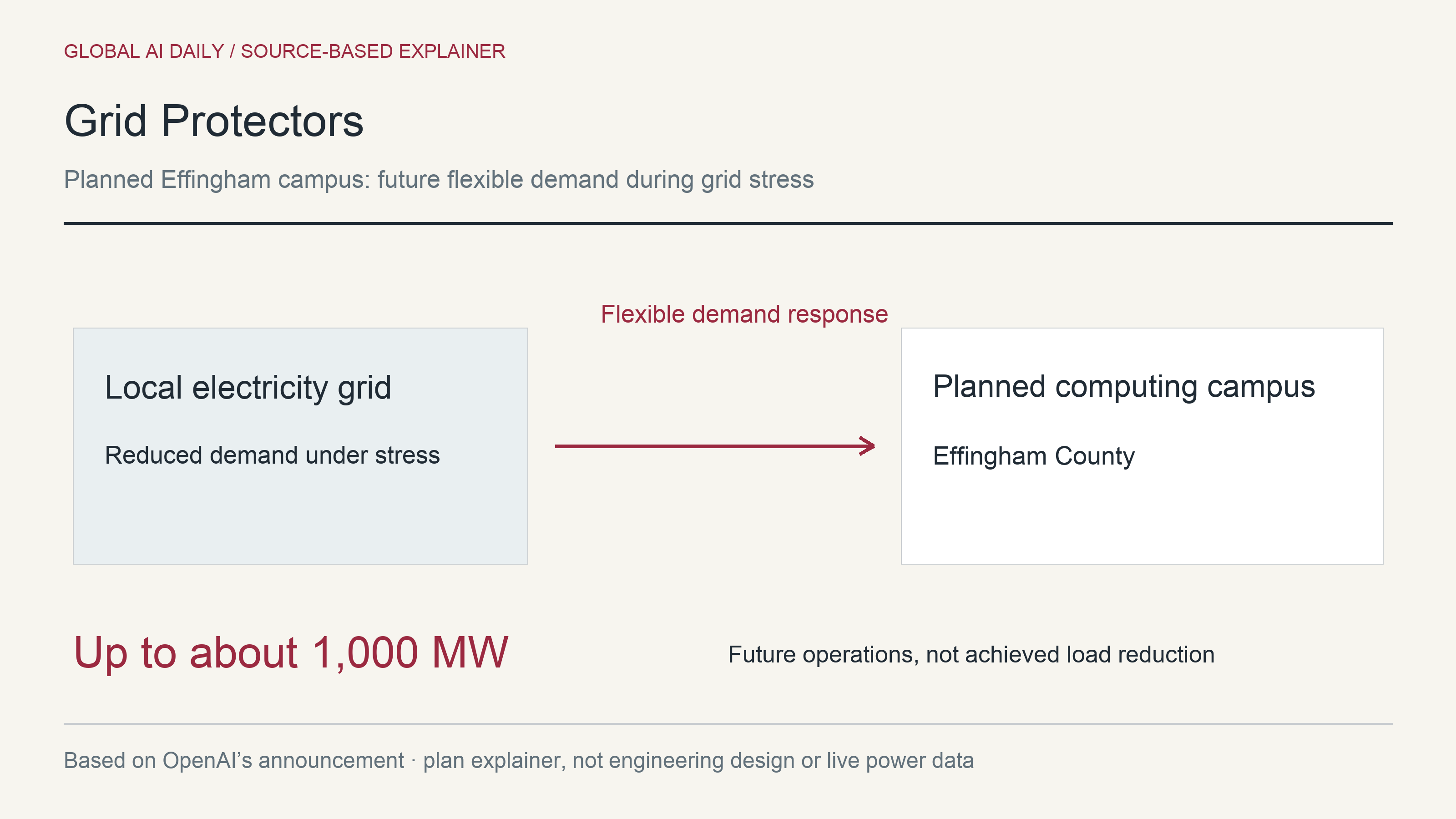
The programme centres on agreements about flexible campus demand: how much can be reduced, how quickly and for how long. OpenAI says local grid needs and available equipment differ, so commitments will vary by location. The announcement does not provide one uniform set of operating parameters for campuses whose arrangements remain unfinished.
The company named its planned Effingham County campus in Georgia as a pilot. It says its Georgia Power agreement includes up to about 1,000 MW of flexible demand response and that it will cover the infrastructure and electricity-service costs required for the project.
Its cost argument is that lines, substations and other grid assets must be paid for throughout the year. Steady demand can help spread fixed costs, while reducing demand at peaks may limit expansion needs. OpenAI links this approach to paying the costs its campuses create. Actual savings depend on agreements, load patterns and utility investment decisions.
The announcement also discusses long-term contracts and financial assurances to protect other customers if a project is delayed, reduced or cancelled. Flexible demand is presented as a complement to investment in new energy supply and transmission. Delivery of the proposed benefits still depends on campus development, specific agreements and subsequent operation.
The campus remains under development, so the demand reductions concern future operations. On-site generation, storage and battery controls depend on local conditions. Utility savings forecasts do not guarantee that every household’s bill will fall.
Sources and accountability
Editorial review completed.